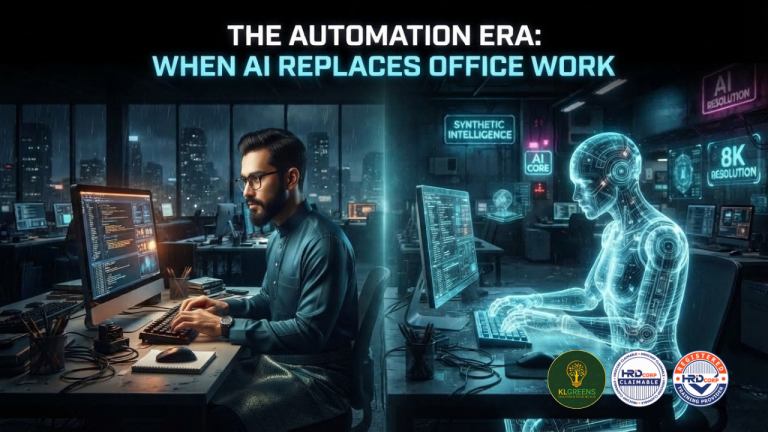

Artificial intelligence is advancing at an unprecedented speed, with system capabilities nearly doubling every few months. Rather than resisting this shift, the key to long-term career security lies in mastering AI orchestration to become indispensable within your organization.
What is the core strategy?
Instead of competing directly against automated systems, focus on identifying and solving AI “bottlenecks,” the critical friction points that algorithms cannot navigate on their own.
Why is this approach necessary?
Trying to outpace artificial intelligence on raw computational power, speed, or data processing is a losing battle. However, AI cannot self-direct, evaluate contextual nuances, or refine its own outputs effectively without human intervention. Mastering the bridge between human intention and machine execution creates irreplaceable value.
Where do human skill gaps exist?
AI tools struggle in key operational areas that require high-level oversight:
Prompt Engineering: Structuring complex, context-aware queries to extract optimal results.
Task Optimization: Determining exactly which workflows to delegate to AI and which require human discretion.
Output Refinement: Interpreting, fact-checking, and tailoring raw machine outputs into actionable business solutions.
When should you apply this?
Implement this mindset immediately. As workplaces integrate AI into daily operations, the demand for professionals who can maximize tool efficiency is actively growing.
How to become a bottleneck breaker:
Master Prompting: Learn how to communicate effectively with generative tools to produce accurate, high-quality results on the first attempt.
Identify Workflow Friction: Spot where team processes slow down and deploy AI solutions to clear those specific hurdles.
Position Yourself as the Specialist: Become the go-to expert in your department for AI integration, ensuring machine outputs are effectively translated into real-world business value.
This article is provided for general information and professional awareness purposes only. Information may change over time and should not be treated as specific legal, financial or professional advice.