
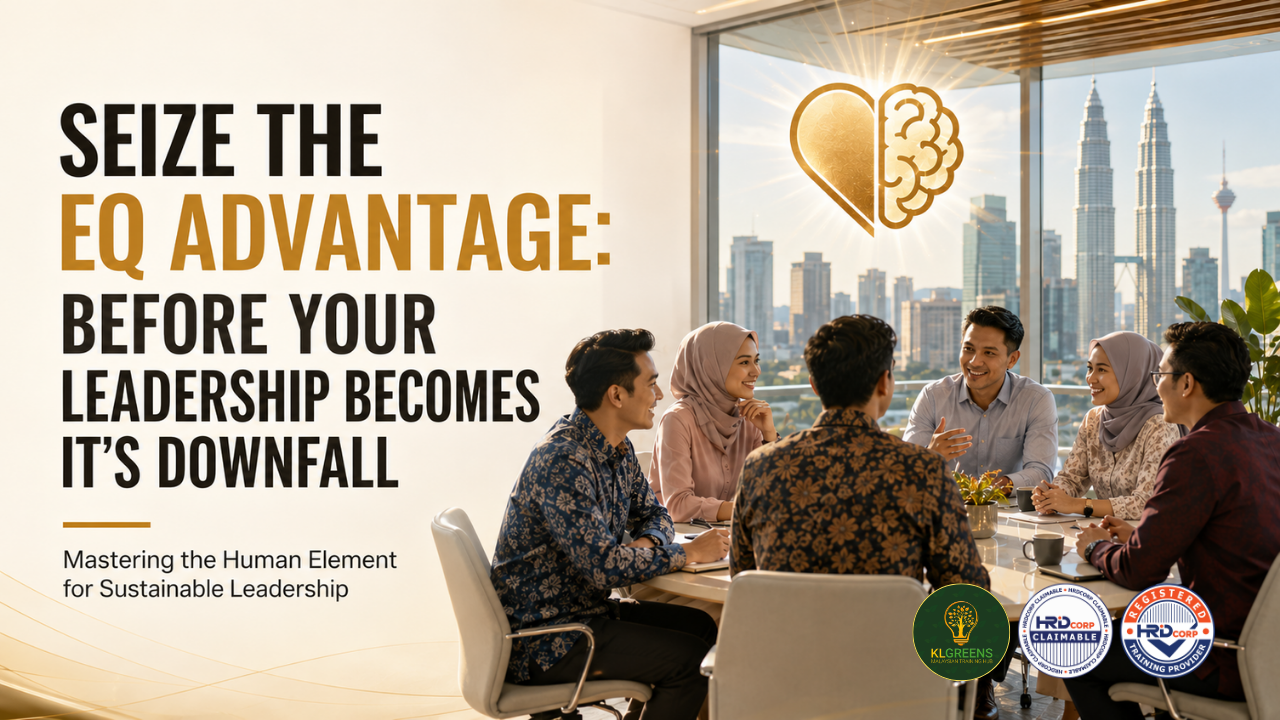
Blogs & Articles Seize the EQ Advantage: Before Your Leadership Becomes Its Own Downfall Related...
Read MoreBlogs & Articles
Seize the EQ Advantage: Before Your Leadership Becomes Its Own Downfall
Related Posts
Could Elon Musk’s Latest AI Upgrade Make Your Job Obsolete?
Blogs & Articles Could Elon Musk’s Latest AI Upgrade Make Your Job Obsolete? Related Posts...
Read More
ChatGPT 5.6 Cyber: The Next-Level AI Upgrade for Automation, Security, and Memory
Blogs & Articles ChatGPT 5.6 Cyber: The Next-Level AI Upgrade for Automation, Security, and Memory...
Read More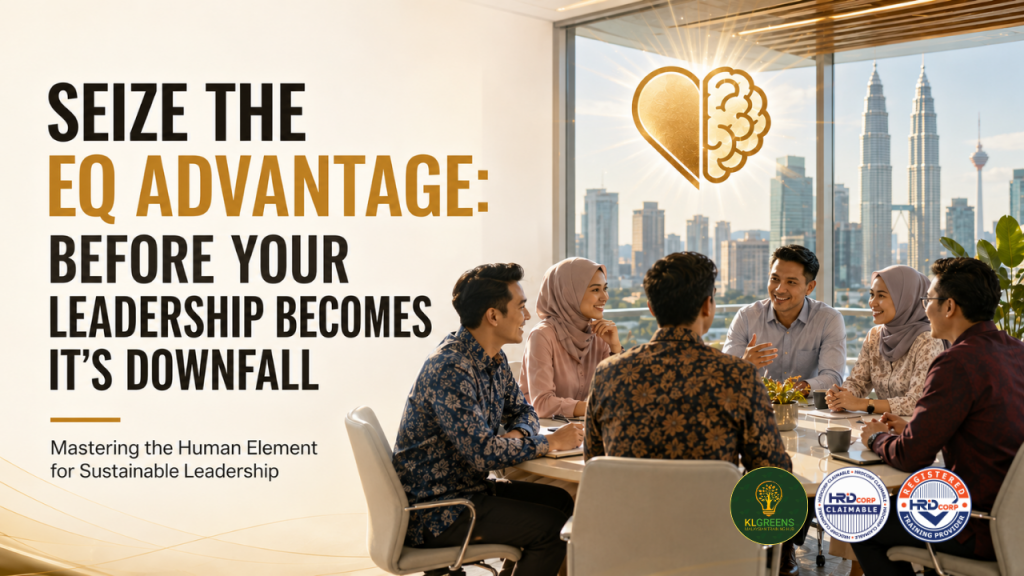
Seize the EQ Advantage: Before Your Leadership Becomes Its Own Downfall
Look around the corporate landscape. You see the monuments to past success, the glass towers, the legacy brands. But if you look closer, you see the fresh graves of companies that thought they were too big to fail. They didn’t lose because their technology broke. They didn’t lose because their balance sheet was weak. They lost because their leaders cracked
We are living through a 5.79% global decline in emotional intelligence. That number sounds dry. In reality, it is a flashing red warning light on the dashboard of the global economy. It means that in a world that is more volatile, uncertain, and complex than ever, our leaders are becoming less capable of handling the human element of the crisis.
The old rules are dead. The “brilliant jerk” is no longer a tolerated eccentricity; they are a liability waiting to happen. If you are leading without high EQ today, you aren’t just risking your bonus; you are risking the survival of your organization.
Don’t believe me? Let’s walk through the wreckage of five giants who forgot that leadership is a human business. These aren’t hypothetical scenarios. These are public autopsies of disasters that burned billions of dollars and destroyed reputations in real-time.
- The EQ Compass: The $47 Billion Hallucination
The Concept: The EQ Compass is your ability to see yourself as you truly are, not as you imagine yourself to be. It requires a brutal alignment between your internal state and your external impact. When the Compass breaks, leaders live in a hallucination of their own greatness.
The Real-World Failure: The Implosion of WeWork
Cast your mind back to 2019. WeWork wasn’t just a company; it was a religion. Its founder, Adam Neumann, was hailed as a visionary on the cover of magazines. He was going to “elevate the world’s consciousness.”
But Neumann’s EQ Compass was shattered. He had zero self-awareness. He sold private jets while preaching community. He cashed out hundreds of millions of dollars before the IPO while his employees worked for scraps. He behaved erratically at board meetings, tequila in hand, convinced that his own charisma was a substitute for governance.
The tragedy—and it is a tragedy—was that he couldn’t see the gap. He thought he was Steve Jobs; the market saw him as a liability. When the S-1 filing went public, investors didn’t just see bad numbers; they saw a leader who lacked the emotional regulation to run a multinational corporation.
The result? The company’s valuation plummeted from $47 billion to under $5 billion in a matter of weeks. Neumann was pushed out with a golden parachute, but the reputation was destroyed.
The Lesson: You are likely not as self-aware as you think you are. If your team is hesitant to correct you, you are standing on a trapdoor. WeWork didn’t fail because of office space economics; it failed because the leader’s compass was spinning wildly. If you don’t calibrate yours, you are building your house on sand.
- The Pause Protocol: The $1.4 Billion Video
The Concept: The Trigger Map warns you when you are about to snap; the Pause Protocol forces you to stop in that split second between stimulus and response. It is the ability to override the instinct to defend, attack, or minimize when things go wrong.
The Real-World Failure: United Airlines Flight 3411
You remember the video. We all do. A bloodied passenger being dragged down the aisle of a United Express jet. It was 2017, and the images went viral instantly, igniting a global firestorm.
But the real disaster wasn’t the security officers dragging the man. The disaster was the CEO’s response.
When the crisis hit, Oscar Munoz faced a choice. The Trigger Map was flashing red—public outrage, media frenzy. He needed to deploy the Pause Protocol. He needed to take a breath, assess the human damage, and respond with empathy.
Instead, he reacted. He sent a memo to staff calling the incident “upsetting” but describing the passenger as “disruptive and belligerent.” He apologized for “having to re-accommodate” customers.
He didn’t pause. He defended the policy.
In that moment of unpaused reaction, United Airlines erased $1.4 billion in market value in a single day. The brand became a punchline. Munoz eventually apologized properly, but the wound was self-inflicted. The first response—driven by a lack of emotional regulation—did the damage.
The Lesson: In the age of smartphones, you do not have the luxury of a bad mood. One unpaused email, one defensive town hall, one memo written in anger can cost you your career. If you cannot hit the pause button when the stakes are highest, you are a danger to your shareholders.
- The Empathy Lens: The “Cost-Cutting” Suicide Note
The Concept: The Empathy Lens allows you to view the world through the eyes of your people and your customers. It is not about being “soft”; it is about gathering accurate intelligence. When you look through the lens, you see the pain points that strategy documents miss.
The Real-World Failure: Nokia’s Fall from Grace
Once, Nokia owned the world. They commanded 50% of the global mobile market. They were the undisputed king of Finland and a global titan.
So why did they collapse so spectacularly when the iPhone launched? It wasn’t that they didn’t have the technology to compete. They did. They had better hardware in many ways. They failed because their leadership lacked the Empathy Lens for their own employees and the shifting culture of the market.
Middle managers at Nokia were terrified of the top brass. The culture was so toxic, so driven by fear and internal politics, that when engineers saw the threat of the iPhone, they didn’t speak up. They knew that bringing bad news to the “temple” would be punished. A study later revealed that Nokia was destroyed by “temporal myopia”—a fear of the present internal consequences that blinded them to the external future.
The executives sat in their glass boxes, looking at spreadsheets, blind to the terror on their own shop floor. They didn’t listen to the warnings because they didn’t have the empathy to understand that their own culture was silencing the truth.
The Lesson: If your people are afraid to tell you the truth, you are flying blind. The Empathy Lens isn’t just for hugging your employees; it’s for detecting the silent signals that your empire is crumbling. If you aren’t hearing the bad news, it’s not because everything is fine. It’s because your EQ is broken.
- The Trust Ledger: The Dieselgate Betrayal
The Concept: The Trust Ledger is the running balance of credibility you hold with your stakeholders. Every promise kept is a deposit; every hypocrisy is a massive withdrawal. When the ledger hits zero, the license to operate is revoked.
The Real-World Failure: Volkswagen’s “Clean Diesel”
Volkswagen was built on a foundation of German engineering integrity. The brand literally means “People’s Car.” It was an institution of trust.
Then, in 2015, it was revealed that VW had programmed 11 million cars to cheat on emissions tests. They weren’t just breaking a rule; they were systemically lying to the world to protect their stock price.
The Trust Ledger didn’t just drop; it was obliterated. The CEO, Martin Winterkorn, resigned in disgrace. The company has paid over $30 billion in fines and settlements.
But the financial cost is just the start. The psychological contract was broken. The engineers who worked there, the dealers who sold the cars, the customers who bought them—they all felt the sting of betrayal. The leadership had prioritized short-term stock gains over the fundamental asset of trust.
The Lesson: You can rob the Trust Ledger for a long time and get away with it—until you can’t. When the crash comes, it is total. In a transparent world, your integrity is your only sustainable asset. If you are faking your values, assume the clock is ticking on your exposure.
- Behaviour Under Pressure Matrix: The Mud and the Mirror
The Concept: The Behaviour Under Pressure Matrix defines how you act when the worst happens. Do you retreat to the bunker? Do you blame the market? Or do you stand in the fire and absorb the heat so your team can work?
The Real-World Contrast: AirAsia QZ8501
When AirAsia Flight QZ8501 crashed into the Java Sea in 2014, killing all 162 people on board, the airline’s CEO, Tony Fernandes, faced every leader’s nightmare.
The cameras were waiting. The world was watching. The grief was raw.
Fernandes didn’t send a spokesperson. He didn’t hide behind a press release. He got on a plane. He went to the recovery center in Surabaya. He was seen in the mud, wearing a simple red shirt, talking to the families, crying with them. He posted on Twitter constantly, raw and unfiltered. “I am devastated,” he wrote. He didn’t try to spin the narrative. He just showed up.
Contrast this with the stiff, corporate, legalistic responses we often see from other carriers (like the initial confusion and lack of empathy seen in the early days of the MH370 tragedy).
Fernandes’ behavior under pressure didn’t fix the tragedy. Nothing could. But it saved the brand. It saved the loyalty of his staff. Because he was willing to stand in the pain, he gave permission for the rest of the organization to grieve and then to rebuild.
The Lesson: Crisis does not build character; it reveals it. Your team does not need you to be perfect when things go wrong. They need to see that you are human, that you care, and that you are in the trenches with them. If you retreat to the spreadsheet when the bodies are on the ground, you lose your right to lead.
The Hard Truth
These stories—WeWork, United, Nokia, Volkswagen, AirAsia—are not history lessons. They are mirrors.
Look at the stress you are under right now. Look at the disengagement in your team. You are walking the same tightrope. The 5.79% decline in EQ is not someone else’s problem. It is the slow leak in your own oxygen tank.
You have the tools. The EQ Compass, the Trigger Map, the Pause Protocol, the Empathy Lens, the Trust Ledger, and the Pressure Matrix. They are not soft skills. They are the only thing standing between you and the front page of the newspaper—for the wrong reasons.
The question is not whether you can afford to invest in emotional intelligence. The question is: Can you afford not to?
Share The Posts
Disclaimer
The articles published on KLGreens are intended for informational and educational purposes only. While we strive to provide accurate, relevant, and up-to-date content, KLGreens makes no representations or warranties of any kind, express or implied, about the completeness, accuracy, reliability, suitability, or availability of the information contained herein. Readers are encouraged to use their own judgment and seek professional advice where appropriate before making business, workplace, or productivity-related decisions. KLGreens shall not be held liable for any loss, damage, or inconvenience arising from the use of, or reliance on, the information provided in these articles. Opinions expressed in articles are those of the respective authors and do not necessarily reflect the views of KLGreens as an organization.
Related Posts
Blogs & Articles Seize the EQ Advantage: Before Your Leadership Becomes Its Own Downfall Related...
Read MoreBlogs & Articles Could Elon Musk’s Latest AI Upgrade Make Your Job Obsolete? Related Posts...
Read MoreBlogs & Articles ChatGPT 5.6 Cyber: The Next-Level AI Upgrade for Automation, Security, and Memory...
Read More